
The name Surgie currently appears in two very different areas of surgical innovation.
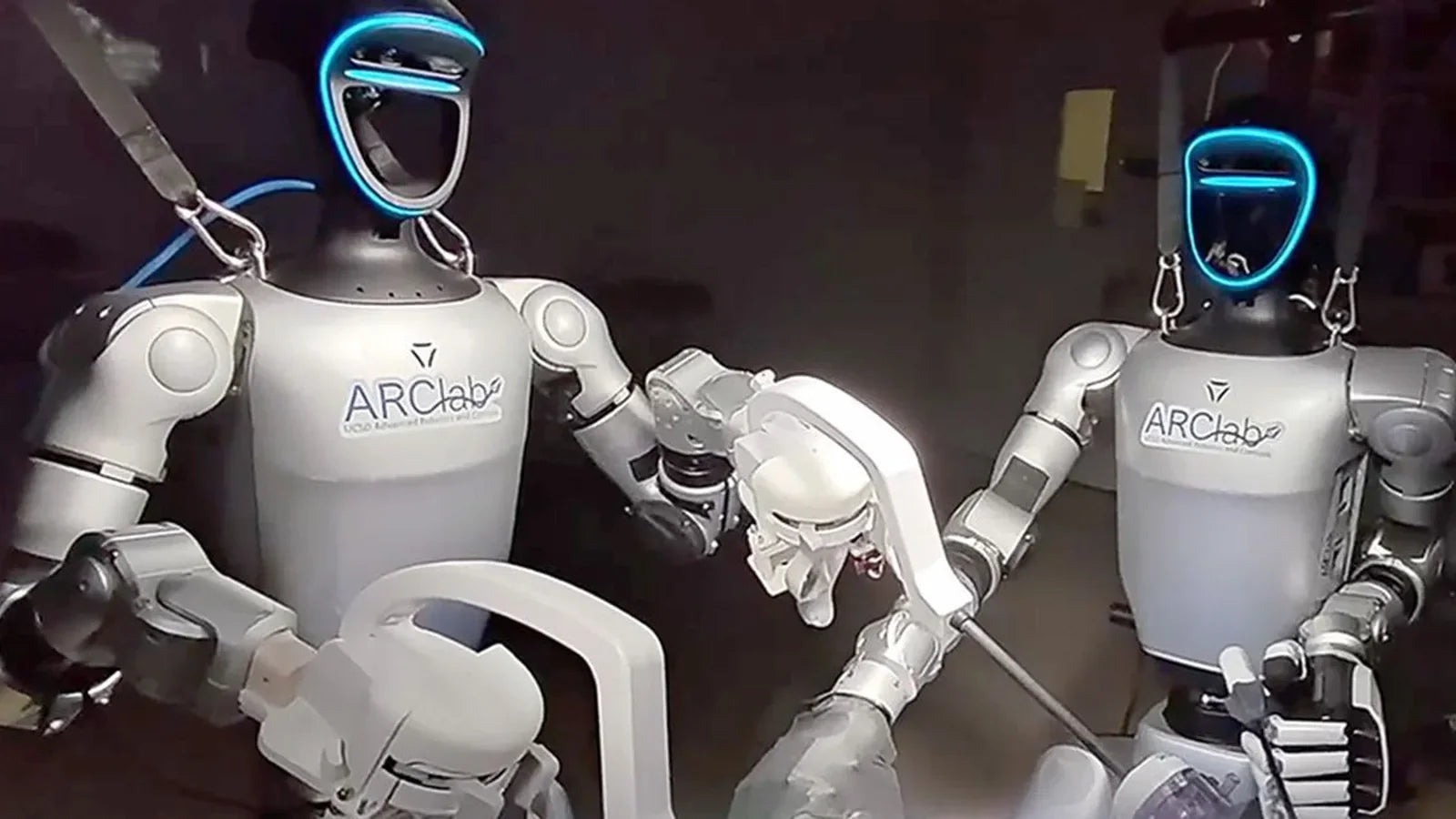
One is a humanoid robotic system used in a recent research study at the University of California San Diego. The other is Surgie.com, an independent surgical education platform where physicians can watch and study real surgical procedures shared by experienced surgeons.
To make the distinction clear:
Surgie.com is not the humanoid robot used in the UC San Diego study, and Surgie.com is not affiliated with that robotics project.
Although both projects are connected to the future of surgery, they have different teams, technologies, purposes and areas of operation.
What is the humanoid robot nicknamed Surgie?
On July 8, 2026, researchers from the UC San Diego Jacobs School of Engineering and UC San Diego School of Medicine reported a world-first preclinical study involving humanoid robots in live surgery.
The researchers used teleoperated humanoid robots to complete two laparoscopic gallbladder removal procedures in live porcine models. In one procedure, a humanoid robot worked with a human surgeon acting as an assistant. In the second, two humanoid robots worked side by side as a robot-robot team.
The humanoid system used in the research was nicknamed Surgie.
An important detail is that the robots were teleoperated. Human surgeons controlled their movements through a surgical console. The study did not demonstrate a robot making autonomous clinical decisions or independently performing surgery on human patients.
The research evaluated the technical feasibility of using general-purpose humanoid robots for laparoscopic tasks. It also identified limitations that still need to be addressed before clinical deployment, including recalibration, latency, procedure duration and system control.
It is an important robotics study, but it is separate from Surgie.com.
What is Surgie.com?
Surgie.com is a surgical video education platform built for physicians, surgeons, residents and medical trainees.
The platform brings real operative procedures from the operating room to the learner's screen. Its educational model is based on complete clinical cases, surgeon-led explanations, first-person surgical visualization and repeatable access to operative techniques.
On Surgie, physicians can explore:
- real surgical procedures;
- surgeon point-of-view videos;
- step-by-step operative techniques;
- expert-led clinical cases;
- multiple surgical specialties;
- complete free procedures;
- previews of paid procedures before purchase.
The current Surgie experience allows visitors to watch complete free procedures without creating an account. Paid procedures can be previewed for up to 50% of the video before the viewer decides whether to purchase full access.
Surgie.com does not manufacture humanoid robots, does not operate as a surgical robotics company and was not involved in the UC San Diego study.
Two projects, two different purposes
The humanoid robot project explores how teleoperated robotic systems could eventually assist surgical teams or extend access to surgical care.
Surgie.com addresses another challenge: how surgical expertise can be recorded, organized, explained and made repeatedly accessible to physicians around the world.
The robot is a physical system designed to interact with the operating room.
The Surgie platform is a digital educational environment designed to help physicians study real procedures, observe surgical decisions and arrive better prepared for supervised clinical experience.
The shared name is a coincidence. The projects are not connected.
Why this clarification matters
The UC San Diego study received international attention, causing some people searching for “Surgie” or “Surgie robot” to encounter both projects.
Clear identification is important because surgical robotics and surgical education serve different functions.
Surgie.com is focused on:
- medical education;
- operative video;
- physician-to-physician knowledge sharing;
- surgeon POV learning;
- preparation for supervised training;
- global access to surgical expertise.
The UC San Diego project is focused on:
- humanoid robotics;
- teleoperation;
- laparoscopic instrument control;
- preclinical feasibility;
- potential future applications in remote and resource-limited environments.
Both areas can contribute to the future of surgery, but they should not be confused.
Frequently asked questions
Is Surgie.com the humanoid robot from UC San Diego?
No. Surgie.com is an independent surgical education and operative video platform. It is not the robot described in the UC San Diego study.
Is Surgie.com affiliated with UC San Diego?
No. Surgie.com has no affiliation with the UC San Diego humanoid robotics project discussed in this article.
Was the humanoid robot autonomous?
No. In the published study, the robots were teleoperated by human surgeons. The system executed movements controlled through a surgical console.
Were the procedures performed on humans?
No. The procedures were part of a preclinical study involving live porcine models.
What can physicians access on Surgie.com?
Physicians can explore real surgical procedures, complete free cases, paid case previews, surgeon POV recordings and educational content shared by experienced specialists.
Surgie's purpose
Surgie exists to transform surgical observation into an immersive and repeatable learning experience.
Instead of replacing mentorship, formal training or supervised operative participation, the platform is designed to help physicians prepare more effectively for those experiences.
The distinction is simple:
The humanoid Surgie is a robotics research platform.
Surgie.com is a surgical education platform.
Explore real procedures, free surgical cases and expert-led operative training on Surgie.
Educational notice: Surgie content is intended for qualified healthcare professionals and does not replace professional medical judgment, institutional protocols, formal training or appropriately supervised clinical experience.
Image: UC San Diego Jacobs School of Engineering, CC BY 4.0.
Cropped and converted to WebP by Surgie.
Source:
https://www.flickr.com/photos/jsoe/55382422760/in/album-72177720334583687
License:
https://creativecommons.org/licenses/by/4.0/


Leave a comment
This site is protected by hCaptcha and the hCaptcha Privacy Policy and Terms of Service apply.