

Hip Hemiarthroplasty via Hardinge Approach
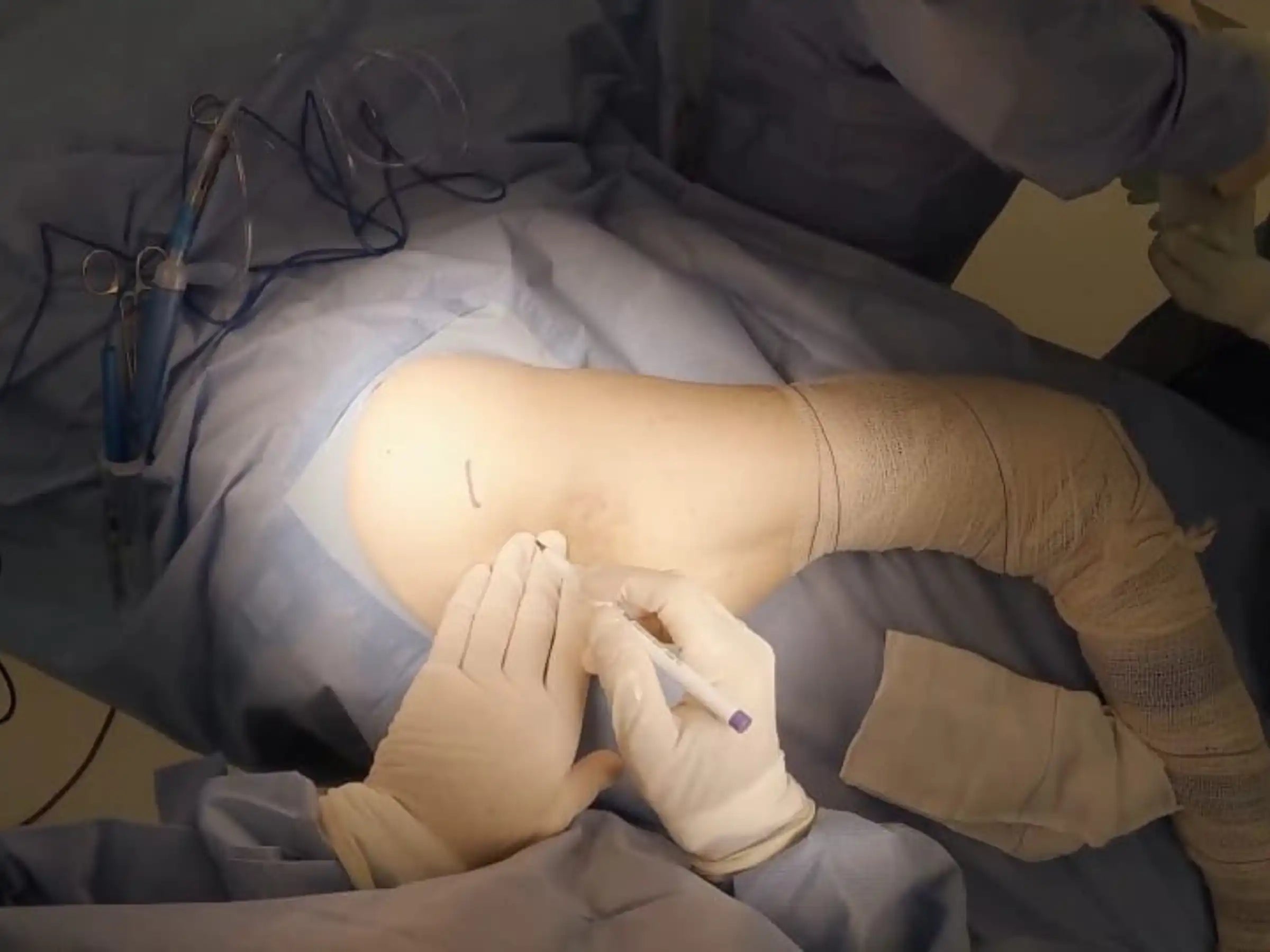
This educational case, presented by Dr. Alexandre Pallottino from the Hip e Trauma Surgery channel, reviews partial hip arthroplasty through the lateral Hardinge approach for the treatment context of femoral neck fracture. The content emphasizes the anatomical rationale of the lateral approach, positioning in lateral decubitus, skin marking, fascial opening, development of the anterior abductor-vastus envelope, capsular exposure, femoral neck management, and assessment of fracture extension toward the calcar and lesser trochanter.
The lesson discusses why the Hardinge approach may be considered in selected fracture scenarios where stability-related reasoning is important, while maintaining focus on educational anatomy and operative planning rather than clinical outcome claims. Key procedural concepts include careful handling of the gluteus medius and vastus lateralis as a single soft-tissue envelope, use of retractors to optimize visualization, capsule management, femoral skeletonization, osteotomy planning, and intraoperative reassessment of implant strategy based on bone quality and fracture morphology.
The case is intended for medical learners and orthopedic professionals seeking structured exposure to hip arthroplasty principles in trauma settings, especially the relationship between access, abductor mechanism preservation, femoral visualization, and implant positioning.
INCLUDED CONTENT
- Procedure-focused surgical video case
- Discussion of the lateral Hardinge approach
- Hip and proximal femur anatomy review within the procedural context
- Soft-tissue dissection and abductor mechanism handling concepts
- Capsular exposure and femoral neck fracture visualization
- Femoral neck osteotomy planning principles
- Educational commentary on implant positioning and intraoperative decision-making
- Trauma arthroplasty reasoning for femoral neck fracture scenarios
TARGET AUDIENCE
- Orthopedic surgery residents
- Trauma and hip surgery fellows
- Orthopedic surgeons interested in procedural education
- Medical students rotating in orthopedics
- Surgical educators developing hip arthroplasty teaching material
- Operating room professionals seeking anatomy-based procedural understanding
EDUCATIONAL NOTICE
This content is intended for medical and procedural education only. It does not replace formal surgical training, institutional protocols, clinical judgment, or supervision by qualified professionals. All medical content should undergo appropriate expert review before use in teaching, clinical discussion, or publication.
Choisir les options
Hip Hemiarthroplasty via Hardinge Approach

HD Surgical Videos
High-quality procedure-based training.